Ibogaine for Addiction Treatment: Promise and Risk
Ibogaine's history from Bwiti ritual to addiction self-help, why drug development stalled, how the studies were done, its cardiac risk, the law by country and Texas's trial funding.

What this article covers
This article tells the story of ibogaine as an addiction treatment: its ritual origins, how it came to the attention of Western medicine, why drug development stalled, how the existing studies were done, the cardiac risk and the law. For the evidence on opioid use disorder, study by study, see ibogaine for opioid addiction. For what to check before trusting a clinic with your heart, see ibogaine clinic safety.
From Bwiti ceremony to a 1962 observation
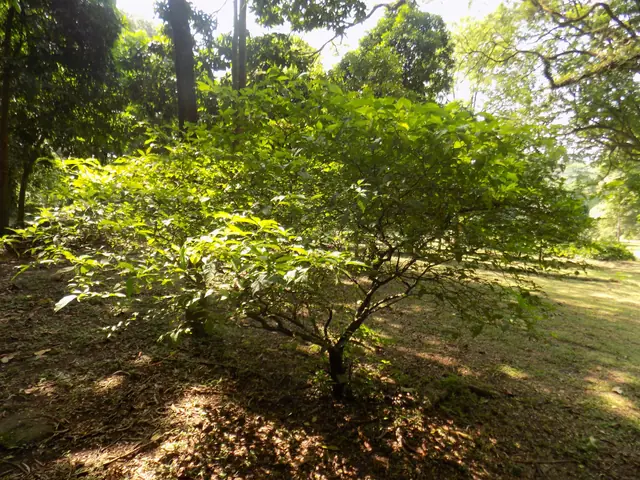
Ibogaine is the main psychoactive alkaloid of iboga, a shrub native to western equatorial Africa. (Journal of Biological Chemistry, 2018) The Bwiti and Mbiri traditions have used the plant for centuries in religious ceremonies. (ACS Chemical Neuroscience, 2018) At lower doses it has been used against fatigue, hunger and thirst, and at higher doses as a sacrament. (Annals of the New York Academy of Sciences, 2000) The plant itself is not under international control: the International Narcotics Control Board has named iboga among plants whose preparations are not covered by the drug conventions. (International Narcotics Control Board, Mar 2011)
In Europe, ibogaine was sold in France as an antidepressant for decades before adverse effects led to its withdrawal. (ACS Chemical Neuroscience, 2018) Its addiction story begins in 1962, when Howard Lotsof discovered what he took to be its anti-addictive properties; he is credited with bringing iboga to the attention of Western medicine through his accidental discovery that it can relieve opioid withdrawal. (Drug and Alcohol Review, 2023; Journal of Biological Chemistry, 2018) Through the 1960s, US heroin users claimed it had ended their addictions. (ACS Chemical Neuroscience, 2018)
The research era and why development stalled
Laboratory work in the 1990s gave the claims some support. In rats, ibogaine and related alkaloids reduced morphine and cocaine self-administration in the hour after treatment, and in some animals the effect lasted days. (Brain Research, 1994)
Human reports came from outside medicine. A 1999 case series summarised 33 opioid detoxifications done in non-medical settings: withdrawal resolved within 24 hours without further drug seeking in 25 people, and one person died, possibly after secretly using heroin. (American Journal on Addictions, 1999) The authors called for proper clinical research. (American Journal on Addictions, 1999)
That research briefly started. According to a 2015 review, the FDA approved a clinical trial of ibogaine in humans in 1993, but the sudden death of a female patient dampened interest, and in 1995 the National Institute on Drug Abuse (NIDA) opted not to fund more human studies. (Molecules, 2015) A University of Miami group did report inpatient results: ibogaine significantly reduced craving for cocaine and heroin during detoxification, and depressive symptoms were lower after treatment and 30 days after discharge. (Annals of the New York Academy of Sciences, 2000) The same group noted that most ibogaine is broken down by the liver enzyme CYP2D6 into noribogaine, an active metabolite that may explain effects lasting after ibogaine leaves the blood. (Annals of the New York Academy of Sciences, 2000) A 2013 review concluded that safety concerns and the lack of solid human data had held back its development as an approved medicine, and that use carried on largely outside conventional medical settings because of its Schedule I status. (Current Drug Abuse Reviews, 2013)
Use kept growing anyway. An ethnographic study estimated that 3,414 people had taken ibogaine by February 2006, four times as many as five years earlier; 68% took it for a substance-related disorder and 53% specifically for opioid withdrawal. (Journal of Ethnopharmacology, 2008)
Chemists have since tried to keep the anti-craving effect without the heart risk. 18-methoxycoronaridine (18-MC), an ibogaine analogue, retained anti-craving properties with few or no adverse effects in laboratory work, with trials for nicotine addiction described as pending in 2018. (ACS Chemical Neuroscience, 2018) Tabernanthalog, designed to carry less cardiac risk, reduced rats' motivation for heroin and alcohol. (Psychedelic Medicine, 2023) Neither is an approved medicine.
How the studies were done
Every addiction study so far has been open-label: everyone knew they were getting ibogaine, and there was no comparison group.
- Brown and Alper, 2018. 30 adults with opioid dependence were followed for 12 months after treatment. Withdrawal scores fell from 31.0 before treatment to 14.0 about 76 hours after, 15 of 30 reported no opioid use in the 30 days before the one-month follow-up, and gains in drug use peaked at one month. (American Journal of Drug and Alcohol Abuse, 2018)
- Noller and colleagues, 2018. 14 people treated in New Zealand; only 8 completed every follow-up interview. Among them, drug use and depression scores were lower at 12 months. One participant died during treatment. (The American Journal of Drug and Alcohol Abuse, 2018)
- Knuijver and colleagues, 2022. A Dutch university study gave 14 opioid-dependent patients a single dose under hospital monitoring, chiefly to measure safety; its results are in the cardiac section below. (Addiction, 2022)
- The Stanford veterans study, 2024. 30 male Special Operations veterans with mostly mild traumatic brain injury, given ibogaine plus magnesium meant to protect the heart. Disability, PTSD, depression and anxiety scores improved a month later, with no unexpected or serious adverse events reported. (Nature Medicine, 2024) It was not an addiction study, and the authors say controlled trials are still needed to establish safety. (Nature Medicine, 2024)
Small samples, people lost to follow-up and no control group mean these results cannot show how much ibogaine itself did. The condition page grades this as early, uncontrolled evidence.
The cardiac risk
Ibogaine reduces currents through hERG potassium channels in the heart, a mechanism by which it may cause life-threatening arrhythmias. (Addiction Biology, 2014; Molecules, 2015) In the Dutch hospital study, the corrected QT interval lengthened by 95 ms on average, half the patients passed 500 ms, and in 6 of 14 it stayed above 450 ms for more than 24 hours; no torsades de pointes, the arrhythmia that QT prolongation can trigger, occurred, but every patient had severe temporary loss of coordination. (Addiction, 2022)
Clinical guidelines from the Global Ibogaine Therapy Alliance treat a long QTc at baseline, over 450 ms in men or 470 ms in women, as a reason to exclude someone, and say a QTc over 500 ms during treatment requires immediate transfer to hospital. (Global Ibogaine Therapy Alliance (Internet Archive copy), 2016)
Deaths are documented. A review of cases from 1990 to 2008 found 19 people who died between 1.5 and 76 hours after taking ibogaine; in 12 of the 14 with adequate post-mortem data, pre-existing conditions, mainly heart disease, or other drugs explained or contributed to the death. (Journal of Forensic Sciences, 2012) A 2018 review counted 33 known deaths. (Progress in Brain Research, 2018) In one New Zealand case, a woman died after a clinic left an assistant alone to monitor her. (New Zealand Health and Disability Commissioner, 2015)
Other dangers follow from the pharmacology. Ibogaine resets opioid tolerance, so using opioids afterwards carries an acute overdose risk. (Global Ibogaine Therapy Alliance (Internet Archive copy), 2016) Stopping alcohol or benzodiazepines suddenly before treatment can cause seizures. (Journal of Forensic Sciences, 2012; Global Ibogaine Therapy Alliance (Internet Archive copy), 2016) Antidepressants that block the CYP2D6 enzyme can roughly double exposure to ibogaine. (Global Ibogaine Therapy Alliance (Internet Archive copy), 2016; Journal of Clinical Pharmacology, Glue P, Winter H, Garbe K, et al., 2015) Never stop a prescribed medicine on a clinic's say-so without talking to your own prescriber; check combinations with the interaction checker.
The legal picture by country
- United States. Ibogaine is Schedule I, so there is no lawful treatment outside approved research. (Legal Information Institute (Cornell) reproducing the U.S. Code, current; eCFR (Office of the Federal Register), current; Texas Legislature Online, 11 Jun 2025)
- Mexico. Ibogaine does not appear in the General Health Law. (Camara de Diputados del H. Congreso de la Union, 15 Jan 2026) Clinics must operate as licensed medical establishments, but no official standard sets ibogaine-specific protocols such as cardiac monitoring. (Infobae Mexico, 21 Sep 2026) For where clinics operate, the Mexico ibogaine hub lists each with its public record.
- New Zealand. Ibogaine has been a prescription-only, unapproved medicine since 2010. (Medsafe, New Zealand Ministry of Health, 2009; New Zealand Health and Disability Commissioner, 2015)
- Costa Rica. In January 2025 the Ministry of Health warned that ibogaine products are unregistered and not authorised for therapeutic use. (Ministerio de Salud de Costa Rica, 27 Jan 2025) An American tourist died there in August 2024 after taking ibogaine; prosecutors received the police findings in March 2025. (CRHoy, 29 Mar 2025; The Tico Times, 27 Aug 2026)
- Colorado. The state's natural medicine law allows regulators to add ibogaine later through its advisory board process. (Colorado General Assembly, 23 May 2023)
Check a specific country with the is it legal tool.
Public money for trials: Texas
Texas SB 2308 took effect on 11 June 2025. It sets up a consortium to run FDA drug-development trials of ibogaine. (Texas Legislature Online, 11 Jun 2025; FOX 7 Austin, Jun 2025) The consortium must include a drug developer, a university and a hospital, must show it can fully match state funding from non-state sources, and the state may not release money until the match arrives. (Texas Legislature, 2025) The law does not legalise ibogaine treatment. (Legal Information Institute (Cornell) reproducing the U.S. Code, current; eCFR (Office of the Federal Register), current; Texas Legislature Online, 11 Jun 2025) Recruiting studies appear under opioid use disorder trials.
If you are weighing it
Three FDA-approved medicines treat opioid use disorder: buprenorphine, methadone and naltrexone. (U.S. Food and Drug Administration, 26 Dec 2024) For confidential help finding treatment in the US, call the SAMHSA National Helpline on 1-800-662-4357, free and open 24 hours a day, or search FindTreatment.gov. (Substance Abuse and Mental Health Services Administration; Substance Abuse and Mental Health Services Administration) If you are still considering ibogaine abroad, read the clinic safety guide and the published prices first.
Related
- Psilocybin Clinical Trial Results: How the Studies Worked and What They Found
- Microdosing Research Review: What Science Actually Shows
- DMT and the Brain: What Neuroscience Reveals
Questions and answers
- Who discovered ibogaine for addiction?
- Iboga had been used for centuries in Bwiti religious ceremonies in western equatorial Africa. Howard Lotsof's 1962 discovery that it can relieve opioid withdrawal is credited with bringing it to the attention of Western medicine. Through the 1960s, US heroin users claimed it ended their addictions.Sources: ACS Chemical Neuroscience, 2018; Drug and Alcohol Review, 2023; Journal of Biological Chemistry, 2018
- Why was ibogaine never approved by the FDA?
- According to a 2015 review, the FDA approved a human trial in 1993, but after a patient's sudden death NIDA opted in 1995 not to fund more human studies. A 2013 review said safety concerns and a lack of solid human data held back development, and ibogaine remains Schedule I in the US.Sources: Molecules, 2015; Current Drug Abuse Reviews, 2013; Legal Information Institute (Cornell) reproducing the U.S. Code, current; eCFR (Office of the Federal Register), current; Texas Legislature Online, 11 Jun 2025Ibogaine for opioid addiction: the evidence
- How many people have died from ibogaine?
- A review of cases from 1990 to 2008 found 19 deaths between 1.5 and 76 hours after taking ibogaine, most explained or worsened by heart disease or other drugs, and a 2018 review counted 33 known deaths. Ibogaine blocks hERG potassium channels in the heart, a mechanism for fatal arrhythmias.Sources: Journal of Forensic Sciences, 2012; Progress in Brain Research, 2018; Addiction Biology, 2014; Molecules, 2015Ibogaine clinic safety: what to check
- Does the Texas ibogaine law make treatment legal?
- No. Texas SB 2308, in force since 11 June 2025, sets up a consortium of a drug developer, a university and a hospital to run FDA drug-development trials, with state money released only once the consortium matches it from other sources. Ibogaine remains a Schedule I substance under federal law.Sources: Texas Legislature Online, 11 Jun 2025; FOX 7 Austin, Jun 2025; Texas Legislature, 2025; Legal Information Institute (Cornell) reproducing the U.S. Code, current; eCFR (Office of the Federal Register), current
Sources
- DARK Classics in Chemical Neuroscience: Ibogaine. ACS Chemical Neuroscience, 2018
- Underground ibogaine use for the treatment of substance use disorders: A qualitative analysis of subjective experiences. Drug and Alcohol Review, 2023
- The anti-addiction drug ibogaine and the heart: a delicate relation. Molecules, 2015
- Treatment of opioid use disorder with ibogaine: detoxification and drug use outcomes. American Journal of Drug and Alcohol Abuse, 2018
- Ibogaine treatment outcomes for opioid dependence from a twelve-month follow-up observational study. The American Journal of Drug and Alcohol Abuse, 2018
- Safety of ibogaine administration in detoxification of opioid-dependent individuals: a descriptive open-label observational study. Addiction, 2022
- Fatalities temporally associated with the ingestion of ibogaine. Journal of Forensic Sciences, 2012
- 21 U.S. Code 812 - Schedules of controlled substances. Legal Information Institute (Cornell) reproducing the U.S. Code, current
- 21 CFR 1308.11 - Schedule I. eCFR (Office of the Federal Register), current
- SB 2308 bill history. Texas Legislature Online, 11 Jun 2025
- Ley General de Salud (texto vigente, ultima reforma DOF 15-01-2026). Camara de Diputados del H. Congreso de la Union, 15 Jan 2026
- Cytochrome P450 and O-methyltransferase catalyze the final steps in the biosynthesis of the anti-addictive alkaloid ibogaine from Tabernanthe iboga. Journal of Biological Chemistry, 2018
- Ibogaine: complex pharmacokinetics, concerns for safety, and preliminary efficacy measures. Annals of the New York Academy of Sciences, 2000
- Report of the International Narcotics Control Board for 2010 (paras 284-287). International Narcotics Control Board, Mar 2011
- Effects of iboga alkaloids on morphine and cocaine self-administration in rats: relationship to tremorigenic effects and to effects on dopamine release in nucleus accumbens and striatum. Brain Research, 1994
- Treatment of acute opioid withdrawal with ibogaine. American Journal on Addictions, 1999
- Ibogaine in the treatment of substance dependence. Current Drug Abuse Reviews, 2013
- The ibogaine medical subculture. Journal of Ethnopharmacology, 2008
- Tabernanthalog Reduces Motivation for Heroin and Alcohol in a Polydrug Use Model. Psychedelic Medicine, 2023
- Magnesium-ibogaine therapy in veterans with traumatic brain injuries. Nature Medicine, 2024
- Magnesium-ibogaine therapy in veterans with traumatic brain injuries. Nature Medicine, 2024
- Anti-addiction drug ibogaine inhibits hERG channels: a cardiac arrhythmia risk. Addiction Biology, 2014
- The anti-addiction drug ibogaine and the heart: a delicate relation. Molecules, 2015
- Clinical Guidelines for Ibogaine-Assisted Detoxification, 1st Edition, Version 1.1. Global Ibogaine Therapy Alliance (Internet Archive copy), 2016
- Ibogaine as a treatment for substance misuse: Potential benefits and practical dangers. Progress in Brain Research, 2018
- Monitoring of patient following administration of an unapproved, prescription-only medication (13HDC00966). New Zealand Health and Disability Commissioner, 2015
- Fatalities temporally associated with the ingestion of ibogaine. Journal of Forensic Sciences, 2012
- Influence of CYP2D6 activity on the pharmacokinetics and pharmacodynamics of a single 20 mg dose of ibogaine in healthy volunteers. Journal of Clinical Pharmacology, Glue P, Winter H, Garbe K, et al., 2015
- Que es la ibogaina, la sustancia psicodelica .... Infobae Mexico, 21 Sep 2026
- Medicines Classification Committee, Minutes of the 42nd Meeting (3 November 2009), item 10.1 Ibogaine and its metabolite noribogaine. Medsafe, New Zealand Ministry of Health, 2009
- Advertencia Sanitaria sobre uso, Consumo, y Publicidad de Ayahuasca e Ibogaina. Ministerio de Salud de Costa Rica, 27 Jan 2025
- OIJ remitio a Fiscalia hallazgos sobre muerte de turista en 'retiro' con iboga (Jose Adelio Murillo). CRHoy, 29 Mar 2025
- Costa Rica Psychedelic Retreat Industry Faces Fresh Scrutiny After Tourist Death. The Tico Times, 27 Aug 2026
- Senate Bill 23-290 (signed act). Colorado General Assembly, 23 May 2023
- Gov. Abbott signs bill directing Texas to invest $50M in psychedelics research. FOX 7 Austin, Jun 2025
- S.B. No. 2308, 89th Legislature (R): enrolled bill text (Health and Safety Code chapter 491, Ibogaine Treatment). Texas Legislature, 2025
- Information about Medications for Opioid Use Disorder (MOUD). U.S. Food and Drug Administration, 26 Dec 2024
- SAMHSA National Helpline. Substance Abuse and Mental Health Services Administration
- FindTreatment.gov. Substance Abuse and Mental Health Services Administration