Classic psychedelic
San Pedro (Huachuma)
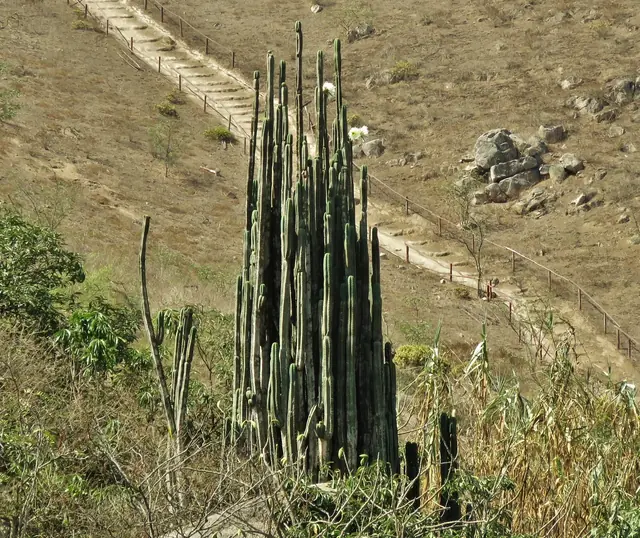
Echinopsis pachanoi
One of the oldest psychoactive plants in the Americas with archaeological evidence from Chavin de Huantar dating to 1300 BCE. Used by Andean curanderos in mesa ceremonies. The colonial Spanish named it 'San Pedro' (Saint Peter) as the key that opens the gates of heaven.

At a glance
- Onset
- 1-2 hours
- Duration
- 10-14 hours
- Origin
- Natural - large columnar cactus native to the Andes Mountains of Peru and Ecuador
Cultivated plants only
The Andean curanderos who work with San Pedro have asked people to stop using wild plants, so we point only to cultivated San Pedro.
- On 1 December 2023 the Huachuma Collective, curanderos and curanderas of northern Peru, called on "practitioners of San Pedro ceremonies in Peru and around the world to stop using wild San Pedro and instead start cultivating the plant en masse from cuttings and seeds." The same statement opposes commercial San Pedro powder and chips. (Huachuma Collective, 1 Dec 2023; Huachuma Collective, English PDF, 1 Dec 2023; The Microdose (UC Berkeley Center for the Science of Psychedelics), 22 Jan 2024)
- San Pedro (Echinopsis pachanoi) is not on Peru's official list of threatened wild flora, Decreto Supremo 043-2006-AG. A 2013 report by the Ministry of the Environment, as Peru's CITES scientific authority, gives its conservation status as "En Peligro" (endangered), footnoted as proposed by the botanist Carlos Ostolaza for Peru only. The same report says San Pedro sold in Lima markets came mainly from the wild, and that export of wild Echinopsis from Peru is restricted. (Ministerio de Agricultura del Peru (FAOLEX copy), Jul 2006; Ministerio del Ambiente del Peru, 2013)
- Globally, the IUCN Red List assesses Echinopsis pachanoi as Least Concern (2017). Like all cacti not in Appendix I, it is in CITES Appendix II, so international trade needs export permits. (IUCN Red List, 2017; GBIF, 2017; CITES, current appendices)
Reported effects
- warm euphoria
- heart-opening experiences
- connection with nature
- gentle visual effects
- emotional healing
- spiritual insight
- increased empathy
Legal status
Mescaline is Schedule I in the US, but San Pedro cactus is legal to grow as ornamental plant in most countries. Legal and culturally integrated in Peru, Bolivia, Ecuador.
Research
Limited formal clinical research. 2021 survey by Agin-Liebes et al. found mescaline users reported lasting improvements in depression, anxiety, and PTSD. Heffter Research Institute has expressed interest.